
Stucco vs Hardie in Calgary: what each needs.
Most Calgary homes are clad in one of two things, and they behave nothing alike. Getting the substrate wrong is the most expensive mistake in an exterior repaint.
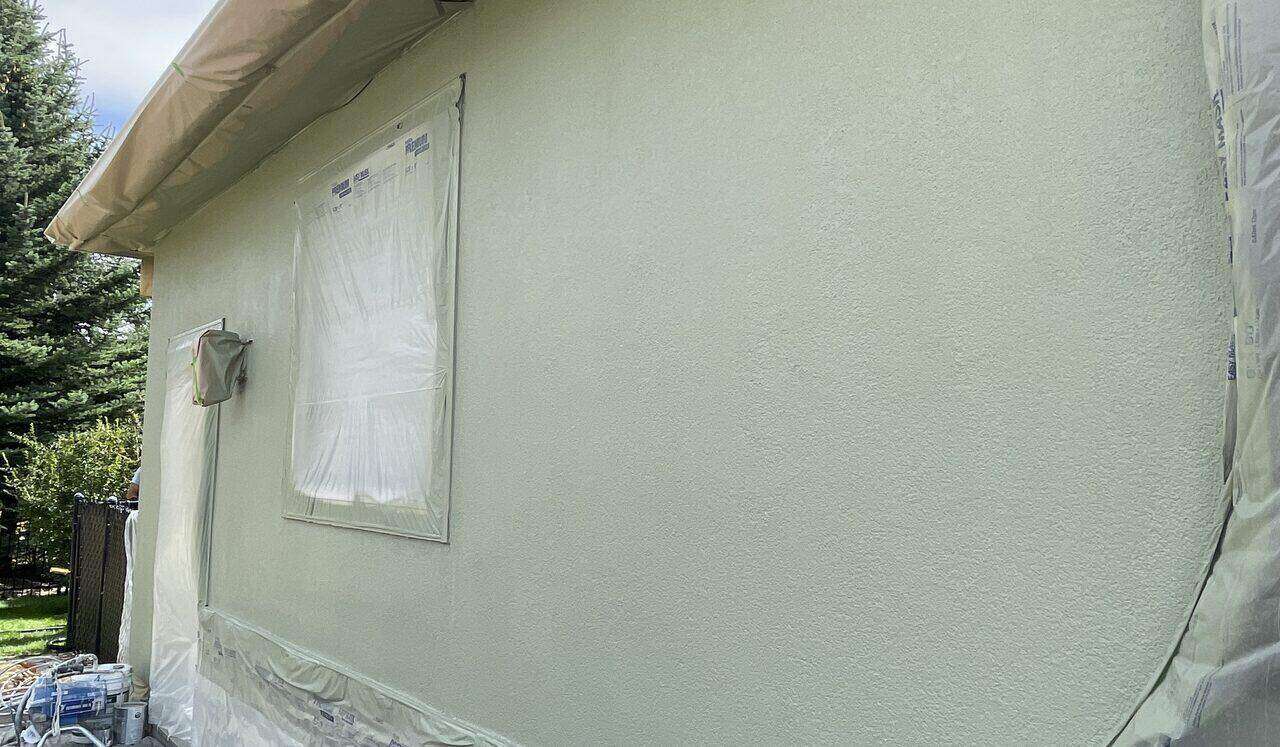
How is painting stucco different from painting Hardie board?
Telling them apart
Stucco is a continuous textured cement-based surface with no visible seams, applied over lath. Calgary's stucco stock is largely acrylic stucco from the 1975–1998 era, and it dominates the northwest and much of the established southwest.
Fibre cement comes in planks with visible butt joints roughly every twelve feet, and it sounds dense and solid when tapped rather than hollow. It became the default in Calgary's newer communities from the mid-2000s onward — most of Evanston, Sage Hill, Auburn Bay, Mahogany and Cranston.
- No seams, textured, cement-like: stucco
- Horizontal planks with butt joints, dense when tapped: fibre cement
- Planks that flex and rattle, with a hollow tap: vinyl
- Visible grain and end joints that swell: wood or engineered wood
What stucco needs
Stucco cracks. Hairline cracking is normal in Calgary because the wall behind it moves through freeze-thaw and our clay soils shift. What is not normal is a crack you can fit a fingernail into, which usually indicates settlement rather than surface stress and should be looked at before painting.
Correct stucco work means washing to remove chalking, routing and filling cracks with a flexible elastomeric sealant, patching missing texture to match, priming bare patches with a masonry primer, and finishing with a breathable coating. Sealing stucco with a non-breathable film traps moisture in the wall assembly and causes far worse damage than the original cracks.
- Flexible sealant on cracks, not rigid filler
- Texture-matched patching so repairs disappear
- Masonry primer on bare or repaired areas
- Breathable topcoat — permeability matters more than sheen
- Budget more material: texture can add 30–50% to coverage requirements
What fibre cement needs
Hardie arrives primed or pre-finished and is the easiest cladding in Calgary to repaint well. The work is washing, scraping any failed factory finish, caulking butt joints and penetrations with a paintable exterior sealant, spot-priming exposed fibre cement, and applying two coats of a quality 100% acrylic exterior.
The two things that go wrong: painting over a pre-finished ColorPlus surface without proper cleaning and adhesion testing, and using a sealant at butt joints where the manufacturer's install detail actually calls for a flashing behind the joint instead. Neither is expensive to get right — both are expensive to fix later.
Cost and lifespan compared
In Calgary, repainting stucco typically runs higher per square foot than fibre cement because of crack repair, texture patching and the extra material the texture consumes. Fibre cement is the cheaper and faster of the two on nearly every house.
Lifespan is the reverse of what people assume: a properly coated stucco wall can go seven to ten years, and well-prepped fibre cement eight to twelve. The variable in both cases is prep quality, not the cladding itself.
Questions people ask
Can you paint stucco in Calgary?
Yes, and most Calgary stucco benefits from it once the original finish has chalked. The requirements are flexible crack repair, a masonry primer on bare areas and a breathable topcoat so moisture is not trapped in the wall.
Do you have to paint Hardie board?
Not immediately — factory ColorPlus finishes carry long warranties. Once the finish fades or you want a colour change, fibre cement is the easiest cladding in the city to repaint, needing only washing, caulking and two acrylic coats.
Is painting stucco more expensive than siding?
Usually yes in Calgary. Crack repair, texture patching and the extra paint the texture absorbs all add labour and material compared with a plank cladding of the same wall area.
How do I know if my Calgary house is stucco or fibre cement?
Stucco is a continuous seamless textured surface. Fibre cement is horizontal planks with butt joints every few metres that feel dense and solid when tapped. Homes built before 1998 in the northwest are most often stucco; post-2005 communities are usually fibre cement.
10+ years on the tools
Coatly is a new name, but not a new crew. The people on your job have been painting Alberta homes for over a decade.
Insured
We carry liability insurance. Want to see the certificate before we start? Ask and we send it over.
A number in minutes
Interior residential estimates come back while you are still on the page — not after three days of phone tag.
Related work we do
- Stucco paintingCalgary is a stucco city — and stucco is the surface freeze-thaw punishes hardest. Painted…
- Siding paintingHardie, vinyl, wood and aluminium each fail differently and each need different prep. Gett…
- Exterior paintingSiding, stucco, trim, fascia, doors and garages. Calgary's freeze-thaw swings and thin-air…
Budget ranges live in the Alberta painting cost guide, and you can book a Calgary painting crew.
Keep reading
- ClimateChinooks & paint failureA chinook can move the temperature 20–30°C in a few hours, dozens of times a winter. Each swing works moisture behind the coating and breaks the bond. Prep, not price per litre, is what survives it.
- ClimateHail & repaintingHail pits paint film as well as denting panels. Painting over unrepaired siding buries the problem and can complicate an insurance claim — settle the claim and repair the substrate first, then paint.
- TimingBest time to paintMost exterior coatings need day and overnight temperatures above about 10°C to cure, which makes late May to mid-September the dependable window. Everyone books the same four months, so quote in spring.
- Colour2026 coloursBenjamin Moore named Silhouette AF-655 its 2026 Colour of the Year; Sherwin-Williams chose Universal Khaki SW 6150. Both suit our light better than the cool greys that dominated the last decade.
- HiringHiring a painterAlberta requires a prepaid contracting licence for anyone taking payment before work is complete, and you can verify a business through Service Alberta. Ask for proof of insurance, a written scope and a product list.
Skip the week of waiting.
Upload a photo, see the colour on your own wall, and get a real number in minutes. Or just call and talk to someone who paints for a living.
Calgary, Alberta · Mon–Sun 9am–8pm MT · Estimates are estimates, never a contract.